
From Pricing to Understanding
Panda Voiceover · Homepage Hero Redesign
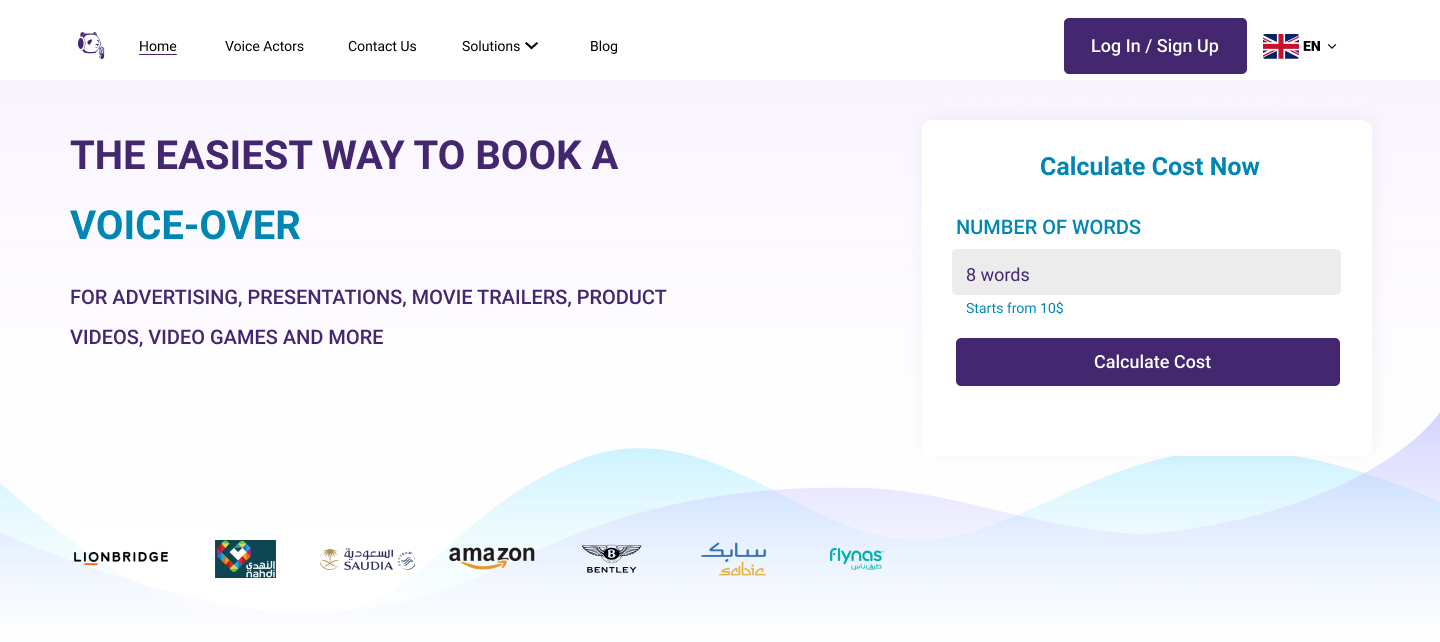
The original Panda Voiceover homepage centered the experience around a word-count calculator. But client conversations revealed a different expectation: people wanted to describe the voice they imagined and let the platform help them find it.
That insight shaped a new direction for the homepage, combining natural-language search, structured talent data, and a simpler path from creative brief to relevant voice samples.
Product Research · UX/UI Design · NLP Requirements · Data Structuring
01 / THE ORIGINAL EXPERIENCE
A Homepage Built Around Pricing
The original Panda Voiceover homepage led with a word-count calculator, allowing clients to estimate recording costs before exploring available voice talent.
While pricing was useful, the experience assumed clients already knew how to translate their creative needs into a service request.
The question became: What if we started with the voice they were imagining instead?
02 / UX RESEARCH
UX Research — The Cornerstone of Design Decisions
asked clients an open-ended question: If you could imagine the ideal voiceover platform, what would it look like?
Across conversations with ten clients, six expressed an expectation for a more AI-driven experience—one where they could describe their needs in natural language rather than navigate traditional search tools.
6 out of 10 clients expressed interest in prompt-based talent discovery.
Client 1 Feedback
“
I want to describe the voice I have in mind, and have the platform understand what I’m looking for.”
Client 2 Feedback
“
The platform should be able to handle the requests I usually send you directly.”
The Design Opportunity
These conversations suggested that clients were beginning to expect more than filters and pricing calculators. They wanted a platform capable of understanding their creative briefs and helping them find relevant voice talent.
This became the foundation for exploring natural-language search, structured talent profiles, and a more intuitive discovery experience.
03 / THE PROPOSED SOLUTION
Type Like You’re Talking to AI
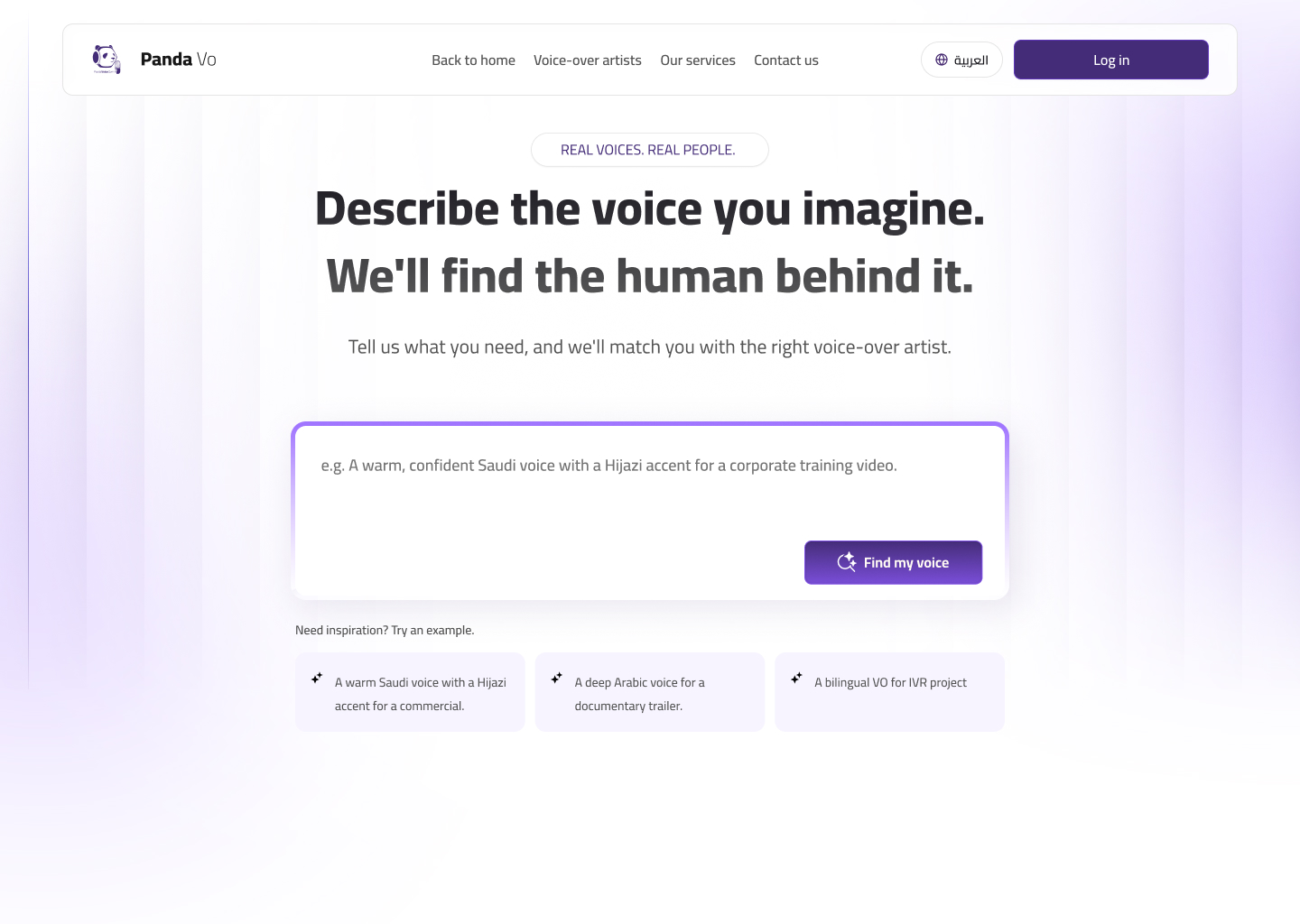
Instead of asking clients to navigate filters or calculate pricing first, the redesigned homepage introduces a natural-language search experience that lets them describe the voice they’re imagining—in their own words.
04 / BEHIND THE EXPERIENCE
From Natural Language to Relevant Voices
The idea goes beyond adding an AI-style search box. For the experience to work, the platform needs to translate what clients describe into information it can use to identify relevant voice talent.
We approached this through three connected components:
01 — Natural-Language Interpretation
Understanding requests such as “a warm, confident Saudi voice with a Hijazi accent” and identifying meaningful attributes like language, accent, tone, and intended use.
02 — Structured Talent Profiles
Organizing voice talent information into consistent, searchable attributes so the system can connect a client’s description with relevant profiles and voice samples.
03 — Matching & Filtering Logic
Defining how interpreted requests can be compared with talent attributes, narrowing the available options while keeping the discovery experience simple.
When Search Doesn’t Find the Right Voice
We also considered what happens when natural-language search doesn’t produce a suitable match. After three unsuccessful attempts, the proposed experience offers clients two alternatives: switch to traditional search filters or contact customer support for personalized assistance.
The goal is to make AI a helpful starting point, not a barrier to finding the right voice.